
Can You Patch a Roof Instead of Replacing It?
Updated: Apr 22
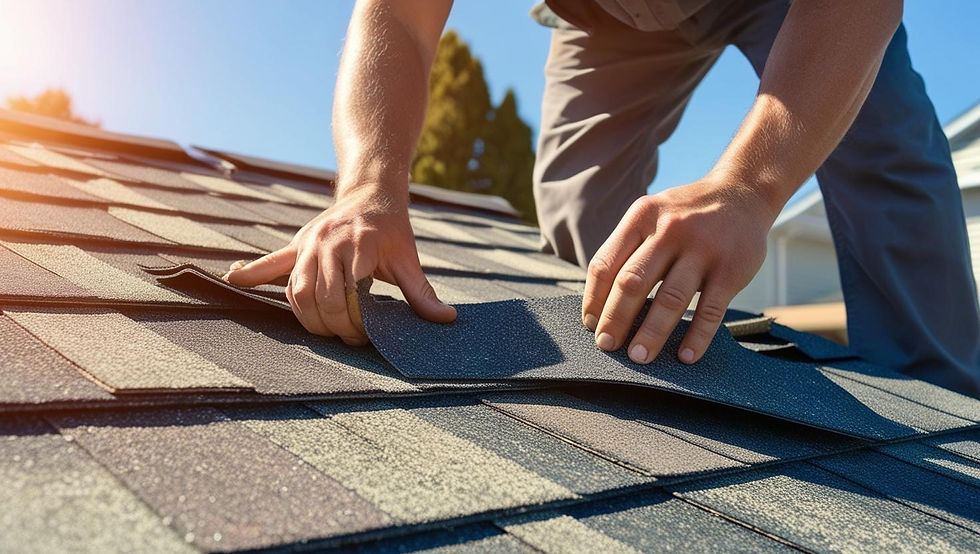
It is the most frequent question that is asked by the homeowners:
Is it possible to simply repair my roof rather than spend money to replace the roof?
The true response is: it depends.
Patching can prove to be a viable and cost efficient solution in most instances. But in others it can only give a temporary relief allowing internal damage to get worse as it goes. Awareness of when a patch will work - and when it won’t - can save you thousands of dollars and structural issues in the long run.
In this guide, we will take you through all that you require to know regarding patching your roof, when it is a good idea, when replacement is the only option and how to decide what to do to your home.
What is Roof Patching?
Roof patching is a specialized repair technique to repair localized, localized damage without having to replace the whole roofing system.
A contractor instead of replacing all the roofing materials concentrates on the area affected and replaces it with similar materials. This may involve:
Repairing a couple of broken or lost shingles.
Repairing small holes or cracks.
Repairing flashing at vents, chimneys or skylights.
Repairing of minor storm related damages.
Patching is usually viewed as a short term or a mid term solution and it depends on whether the rest of the roof is in a good condition as well. Contact for shingles and tile roof repair services.
Roof Patching: When it Is a Wise Decision
Not all roofing problems need to be replaced. Actually, a well-done patch can be used to solve many problems - particularly those that have a small amount of damage.
1. Minor, Isolated Damage
Patching is usually enough in case it is a minor part of your roof that is affected. Examples include:
Some broken or blown-off shingles following a storm.
A tiny wound, which was made by falling debris.
Focal wear on a part of the roof.
The rest of the roof in such instances is structurally sound and patching is a rational solution.
2. A Roof that is Relatively New
The age factor is significant in deciding on the viability of patching.
When your roof is less than 10-12 years and has been well maintained, then it probably has several years left to live. Local repair may be done to restore functionality without necessarily having to replace the whole repair.
3. One Source of Leaks
Patching can be a solution to a leak when it is evident that the leak is coming out of one location that can be identified, e.g., broken flashing or a lost shingle.
Symptoms of a one-source leak are:
There was one obvious spot of water on the ceiling.
Moistness of a particular part of the attic.
None of the moisture damage is extensive.
4. No Structural Damage
Patching will be safe, provided that the underlying roof deck (the wooden base under the shingles) remains solid and intact.
The damage will be found to be superficial or deeper by a professional-inspection.
5. Budget Limits or Short term planning
Patching can be used by the homeowner in a temporary manner when he/she has budget constraints or intentions like selling the house or repurposing the house in the future.
Patching can purchase time in such circumstances but will avoid imminent water damage.
When Patching Is Not Enough
Patching may be a good thing, but not always. It may in fact slow down repairs required and cost more in the long-run in certain cases.
This is the time when a complete roof replacement is something that you need to highly contemplate.
1. An Aging Roof (20+ Years)
The typical roofing systems last 20-30 years with respect to materials and care.
Patching will not work as well with a roof that is within or beyond this range since:
Materials already are rotting.
New patches are not very good adhesives.
To continue to appear are problems.
When the cost of replacement is generally less effective, this is the level at which replacement is brought in.
2. Repairs Made to the same part several times
When you have already patched the same area several times it is an indication that there is more to the problem.
Reoccurring leaks may be an indicator of:
Hidden moisture damage
Poor ventilation
Widespread material failure
Patching up in this case is like putting a bandage to a wound which recurs–it will not resolve the issue.
3. More than one Leak or general Damage
When you notice leaks in various places around your house, it implies something is amiss in the entire system, and not in one place.
Common signs include:
There are stains of water in several rooms.
Moist insulation in a number of attics.
Mold/ mildew.
In such scenarios, spotting will not take care of the general decay.
4. Structural Issues
Patching cannot be adequate in case the roof deck is damaged.
The red flags of structural damage are:
Areas of the roof that are sagging.
when stepped on, soft or spongy.
Possible rot or mould in the attic.
Unless these problems are met with repairs that are a lot more comprehensive or even replacement, they pose threats to the safety and longevity of the product.
5. Problems with Moisture and Mold
The water that gets stuck may cause severe issues within your house, such as:
Mold growth
Insulation damage
Poor indoor air quality.
Patching will not be sufficient in case the moisture has already diffused over an extensive area.
Why Timing Matters More Than You Think
Roofing problems in areas that are exposed to a lot of rain and moisture can easily increase rapidly.
The slightest leak can:
Diffuse to adjacent resources.
Loss of insulation and drywall.
Result in the growth of mold in a few days or weeks.
Postponing repairs (patching or replacement) may result in a small problem becoming a big cost.
That is why it is of great importance to check and take actions in time.
Patching vs. Replacement: Practical Comparison of Roofing
The trade-offs between patching and replacement can aid in your decision because you will be more informed by understanding them.
Cost
Patching: Less initial expense.
Replacement: Increased initial cost.
Longevity
Patching: Temporary repair (months to a couple of years)
Replacement: Long term solution (20 50 years)
Risk
Patching: Could not deal with concealed problems.
Replacement: Solves the problems behind.
Resale Value
Patching: No or little impact.
Replacement: Good positive return.
Warranty
Patching: No warranty or limited warranty.
Replacement: Full warranty of manufacturer and workmanship.
Patching can appear cheaper in the short run, but end up being costly in the long run since repeated repairs can become expensive.
What to do to make Decision on What is Right to your Home
It is not always easy to decide on whether to patch or to replace your roof. It involves a keen consideration of a number of factors such as:
Age of your roof.
The extent of the damage
Your future plans of the property.
Your budget
The best method of getting a clear answer is through a professional check up. At Northwest, we work with an open-mindedness and no-pressure approach- to guide homeowners through the process of knowing what they can do without trying to force them to do some unwarranted replacements.
Professional Inspection
A lot of problems with roofing are not seen on the ground. What might seem like a minor issue may have more severe damages lurking behind it.
Inspecting in detail usually involves:
Inspecting shingles and checking for wear and damage.
Checking flashing and seals.
Assessing ventilation and insulation of attics.
Locating moisture or mould.
This is an all-inclusive method that will make the solution suggested between patching or replacement be founded on facts rather than speculations.
Avert Future Roof Issues
No matter which option you prefer, patching or replacement of your roof, proper maintenance could save you on expensive repair costs and increase the life of your roof. Contact us if you want to know roof replacement tips.
Key maintenance tips:
Keep the gutter clean to avoid accumulation of water.
Eliminate litter (leaves and branches).
Check your roof post storms.
Solve minor problems in a timely manner.
Arrange professional yearly inspection.
The proactive care can play a major role in the length of life of your roof. Visit your nearest area for roofing repair services.
Frequently Asked Question
1. What is the duration of the roof patch?
Depending on the quality of a repair done and the overall state of the roof, a roof patch may last a few months, up to several years. In case the rest of the materials surrounding are in good condition, a patch can be firm. But with older roofs the patches are usually temporary.
2. Is patching or is it cheaper than replacing a roof?
Yes, patching is cheaper in the initial expenses. But when numerous patches are required with time, the overall cost can even cover higher than the replacement cost. Long-term value should be taken into consideration and not only immediate savings.
3. Am I able to roof myself?
Although small repair jobs may appear to be easily handled, DIY roof fix jobs may prove to be dangerous and conceal other problems. Poor repair work will result in greater future damage and expenses. Usually, it is preferable to have the repair done and evaluated by a professional.
Final Thoughts
Patching is most effective on small, isolated problems that are on fairly new roofs. However, in case of extensive damage, repetitive or relating to old materials, restoration is typically a dumber investment.
It is best to do it in the early stages and make a wise decision following a proper inspection. Delaying action- or selecting the inappropriate solution- may result in larger problems and increased expenses in the future.
Unless you are certain about the state of your roof, the next thing you want to do is to seek the advice of a professional. An honest evaluation now can spare you some unforeseen maintenance in the future.

Comments