
Roof Underlayment Explained: Why It Matters
- Apr 3
- 6 min read
Discover why roof underlayment is the hidden hero protecting your home from leaks, moisture, and costly damage.
You need not be told how strenuous the weather is in the Pacific Northwest: it can be as much as it is in your own home. Constant rain, humidity, and windstorms keep putting your roofing system under constant pressure. Although most homeowners are concerned with shingles or metal panels, the actual protection can be found beneath the surface.
Roof underlayment is a knowledge you need in order to ensure your home is dry, energy efficient and in good structural conditions. This coating is like a back-up defense mechanism of your roof- it comes in when the outer coverings of your roof are damaged.
Here in this detailed guide, we will define what roof underlayment is, why it is particularly important in wet climates, the various types underlayment comes in and how the appropriate system can greatly enhance the life of your roof.
What is Roof Underlayment?
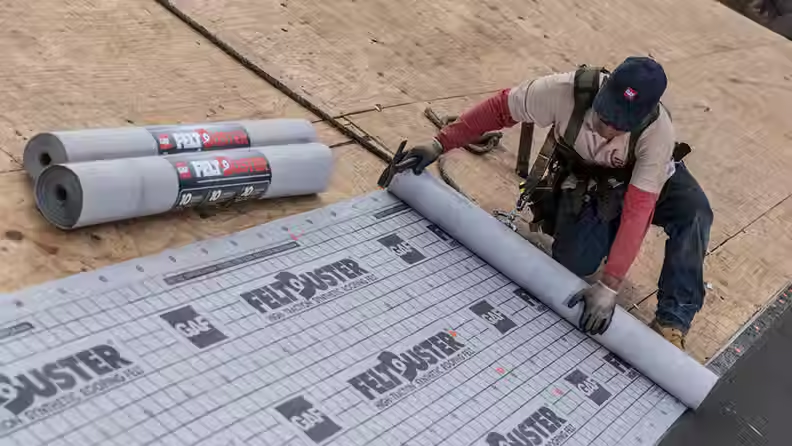
Roof underlayment is a protective coating that is placed right over your roof deck and under your finished roofing, asphalt shingles or metal panels. It is designed to offer a second layer of water proofing in case of a breach of the outer roofing layer by the moisture.
Even the finest shingles or panels will not stand up in severe circumstances, the powerful winds may blow them off, the debris may harm them and the heavy rain may enter in through tiny cracks. Underlayment will give you a guarantee that even when the upper layer is damaged your house will not be completely vulnerable.
Imagine it to be a safety net. And you should never see it, but it is an important part in ensuring that your home is dry and secure all year round.
Types of Roof Underlayment
Today there are three popular types of roof underlayment. They both have their advantages and it depends upon your roof type, climatic conditions and your budget to make the correct selection.
Asphalt-Saturated Felt (Tar Paper).
This is the classical type of underlayment which has been in use since decades.
Features:
Created with either organic or fiberglass base in asphalt.
Offers a low level of water protection.
Inexpensive in comparison to contemporary choices.
Limitations:
Easily tears when installing.
Soak up water with time.
Not as long lasting in wet environments.
Felt underlayment is being phased out of use, but is still used in a few projects.
Contact us for shingles and tile repair services.
2. Synthetic Underlayment
Modern roofing has adopted synthetic underlayment as the choice of roofing.
Features:
Constructed out of woven or spun polyethylene or polypropylene.
Lightweight and yet very tough.
Extremely impervious to water, fungus and UV rays.
Gives installers an improved traction.
Advantages:
Longer lifespan
Greater tear resistance
Excellent performance in wet conditions.
Synthetic underlayment is commonplace at Northwest Roofing as it allows a good tradeoff between durability and moisture protection.
Self-adhering membrane (Ice and Water shield)
It is a product that is used to cover the roof.
This is a high-quality underlayment, which is most effective at waterproofing.
Features:
Peel-and-stick application
Seal using nails and fasteners.
Best suited to high-risk regions.
Advantages:
Best used in,
Roof valleys
Eaves and edges
Where chimneys, skylights, and vents are.
This kind of underlayment is crucial in those places where water is likely to be the most frequent occurrence or infiltration.
The Reason Why Roof Underlayment is Important in Wet Climates
1. Constant Rain Exposure
Water tops the list of threats to your roof in areas with high rainfall. The slightest opening in shingles can result in the seepage of moisture. Underlayment is used as a secondary protection, to ensure that the roof deck does not get touched by water.
2. Wind-Driven Rain
Powerful winds may blow the rain or upwards under the shingles. This occurs particularly when there is a storm. Unless underlayed, water may easily penetrate your attic and cause damage.
3. Moss and Living Organisms
Areas with trees are likely to have moss and debris. Moisture that is deposited on the roof surface by leaves and pine needles poses a greater risk of water being trapped and penetrating through to the roof.
Good underlayment will add level of protection to this continual exposure to moisture.
4. Gutter Backup Issues
Gutters that are clogged can lead to water accumulating behind shingles, particularly in low-sloping roofs. Underlayment is used to eliminate the seepage of this water in the structure of the home.
5. Condensation Control
In some roofing designs- particularly the metal roof- the condensation may be found in the underside of the panels. Correct underlayment will allow this moisture to be controlled and prevent any damage to the roof deck.
Where Underlayment Matters Most
Your roof is not as vulnerable in all its parts. There are regions that have to be more secure as they are more exposed to water.
Key High-Risk Areas
1. Valleys
These places direct huge amounts of water during precipitation. Leaks are very likely to occur unless there is proper undersetting. Contact us if you want to know how to find a roof leak.
2. Eaves and Edges
Water is likely to be stagnant and accumulate here, particularly during the times when the gutters are blocked.
3. Roof Penetrations
The vents, chimneys, and skylights provide openings through which water can easily get into the building.
4. Low-Slope Sections
On flat surfaces, water will drain at a slower rate, and there will be an increased likelihood of pooling.
Recommended Underlayment Systems
The selection of proper mix of underlayments materials could be a big factor in the performance of your roof.
Asphalt Shingle Roofs
Synthetic underlayment for full coverage
Ice & water shield at both the eaves and the valleys.
Metal Roofing
Breathable/synthetic underlayment.
Further waterproofing along the edge
Low-Slope Roofs
Full-coverage waterproof membrane
In Northwest Roofing, each roofing system is tailored according to the structure, slope, and exposure to the environment to be as protective as possible.
Does Underlayment Have an Impact on Roof Life?
Absolutely. Although the shingles are meant to bear the impact of the environment, underlayment is very important in maintaining the building below.
An excellent underlayment system can:
Discourage damage to the roof deck by water.
Minimize the chances of mould and rotting.
Increase the life of your roof.
Improve long-term performance
In its absence, the slightest leakages may cause serious structural impairment in the long run.
Is there an Effect of Underlayment on Warranty?
Yes, and this is what most homeowners fail to put into consideration.
Underlayment is an essential part of the warranty of most roofing manufacturers, which specify the type of underlayment used. Provided that the wrong or bad materials are utilized, warranty can be canceled out- even though shingles themselves are new.
This means:
You might not be covered with defects.
Repair can not be reimbursed.
There may be an increase in long-term costs.
By ensuring that you use experienced professionals, this will guarantee that your roofing system is in accordance with all the manufacturer requirements.
Typical Fallacies to be Avoided
1. Choosing Cheap Materials
Less expensive underlayment can save on money in the short-term, but might result in increased repair expenses in the long-term.
2. Skipping High-Risk Areas
Failure to strengthen valleys, edges or penetrations predisposes the chances of leaks.
3. Poor Installation
The most suitable materials will not work properly when wrongly installed.
4. Ignoring Ventilation
Underlayment can be used effectively as a part of a complete roofing system, such as with adequate airflow.
Value of Quality Underlayment (Long-term)
Not only does investing in underlayment of high quality provide protection, but it also provides long-term value.
Benefits Include:
Reduced number of repairs.
Improved energy efficiency
Better indoor comfort
Higher value of home resales.
Composure in times of severe weather.
In Northwest Roofing, we are more concerned with materials and installation methods that will provide long performance, rather than immediate performance. Visit your nearest area for roofing repair services.
Final Thoughts
Underlayment on the roof might not look like it, but it is a most crucial part of the overall roofing structure. It serves as the final barrier of moisture intrusion into your home covering all the areas underneath it- your attic, living rooms, etc.
In wet weather, rain and moisture are always a problem and therefore proper underlayment is all it takes to have a roof last several decades and even more.
When replacing or repairing your roof, be sure to not ignore this important layer. Enquire about the materials they are using, why they are good and ensure that your roof is constructed in such a way that it can be able to withstand the conditions it will be exposed to.
FAQs
1. Do I need roof underlayment in case I have high-quality shingles?
And the best shingles, even, are not all water-tight. Underlayment is an added protection to the outer roofing material in case water bypasses the outer roofing material.
2. Which is the most appropriate type of underlayment in a wet climate?
Synthetic underlayment with self-adhesive waterproof sheets is the most appropriate in places that experience a lot of rain and are in need of waterproofing.
3. What is the life span of roof underlayment?
It depends on the material applied to have a lifespan. Synthetic underlayment has the potential of lasting as long as the roofing system itself, whereas the traditional felt might not last as long as the roofing system itself.

Comments